
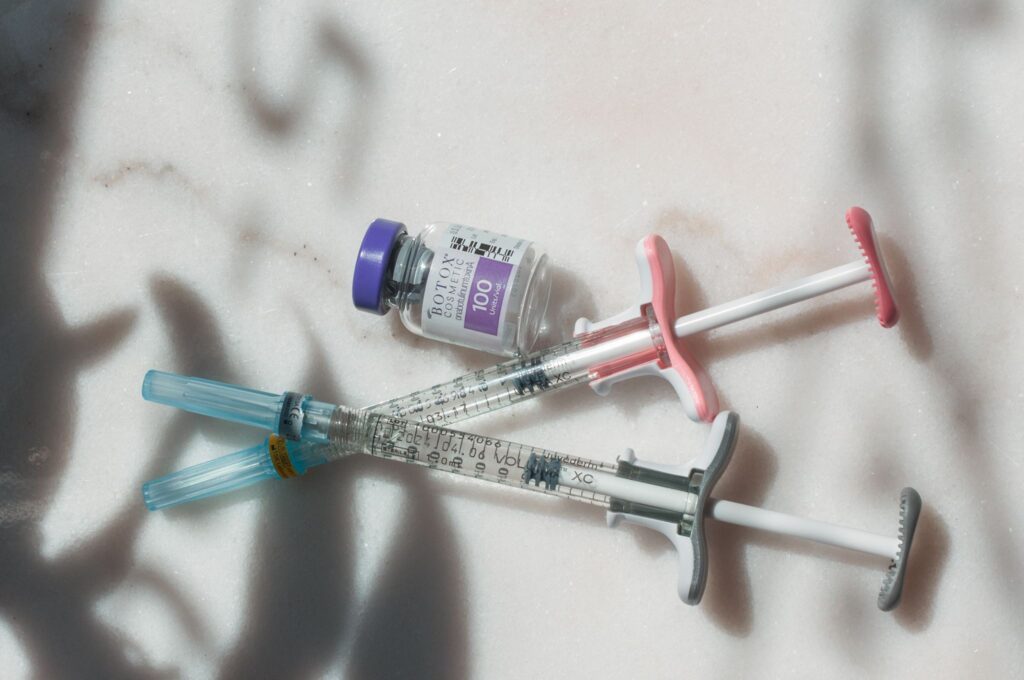
Bruising after Botox or filler is one of the most common things patients ask about before their appointment, and it’s a fair question. Anytime a needle goes into the skin, there’s a chance of hitting a small blood vessel, and that shows up as a bruise. The FDA notes that bruising is the single most common side effect of dermal fillers, affecting roughly one in five patients to some degree. Most of it is minor and predictable. A bruise from an injection heals the same way a bruise anywhere else on your body does, which means it can take up to two weeks to fully fade. But some areas bruise more visibly than others, last longer than expected, or raise questions patients don’t always know who to ask. Here’s what actually causes bruising after Botox or filler, which areas tend to bruise more, and what you can do before and after your appointment to keep it to a minimum.
Bruising happens when a needle nicks a small blood vessel under the skin, and blood pools in the surrounding tissue instead of staying inside the vessel. This isn’t a sign anything went wrong. The face has a dense network of small, delicate vessels close to the surface, and even the most experienced injector can’t see every one of them before the needle goes in. Factors like medication use, skin thickness, and vessel location can make bruising more or less likely, but they don’t guarantee anything. Bruising can happen with any injection, at any appointment. If you’ve never bruised before, that doesn’t mean you never will. And if you bruise once, that doesn’t mean you’ll bruise every time.
Some treatment areas are more prone to bruising simply because of the anatomy underneath. The lips, under-eye area, and crows feet all sit over a higher concentration of small vessels than places like the forehead or cheeks, which is part of why patients often ask specifically about under-eye filler bruising. This comes up most often with Juvéderm in the under-eye area and Voluma in the cheeks, and it’s also a common question for lip filler or a lip flip.
The skin under the eyes is also thinner than almost anywhere else on the face, which means any bruising that does occur tends to show more clearly and take a little longer to fully fade, sometimes two full weeks. This isn’t a sign of a bad outcome. It’s simply a more visible area with less tissue to mask normal healing.
Most bruising from Botox or filler resolves in five to 14 days, moving through the familiar progression from red or purple, to blue or green, to yellow, before fading completely. Under-eye filler and lip filler can run slightly longer, closer to ten to fourteen days, because of the thinner skin and higher vessel density in both areas. If a bruise is still visibly dark or growing in size after two weeks, that’s worth a call to our office rather than something to wait out.
A few simple steps make a real difference, and most of them start well before you sit down for treatment. The first is timing. Since a bruise can take up to two weeks to fully fade, schedule your Botox or filler appointment at least two weeks before any big event where a bruise would bother you, like a wedding, a vacation, or professional photos.
Avoid alcohol, ibuprofen, aspirin, and fish oil supplements for 24 to 48 hours before your appointment, since all of these thin the blood and make bruising more likely. Ice applied gently in the first few hours after treatment can also help limit how much a bruise spreads, though it won’t prevent one from forming if a vessel was nicked.
After your appointment, ice applied gently in the first few hours can help limit how much a bruise spreads, though it won’t prevent one from forming if a vessel was nicked. Skip strenuous exercise for about 24 hours, because a higher heart rate sends more blood to the treated area. Sleeping slightly elevated for a night or two can help with swelling and bruising around the eyes, and if you’re spending time outside, keep sunscreen on any healing bruise, since sun exposure can darken the discoloration and keep it around longer.
Arnica is a common recommendation, and some smaller studies have shown it can help with bruising after cosmetic procedures. If you’d like to try it, it’s a low-risk addition to the steps above.
Red light therapy is another option some patients use to help a bruise fade faster. Wait at least 24 hours after treatment before your first session to give the area a day to settle, then use it once a day on clean, dry skin with no lotion until the bruise fades. If you’re still icing, ice before a session rather than after.
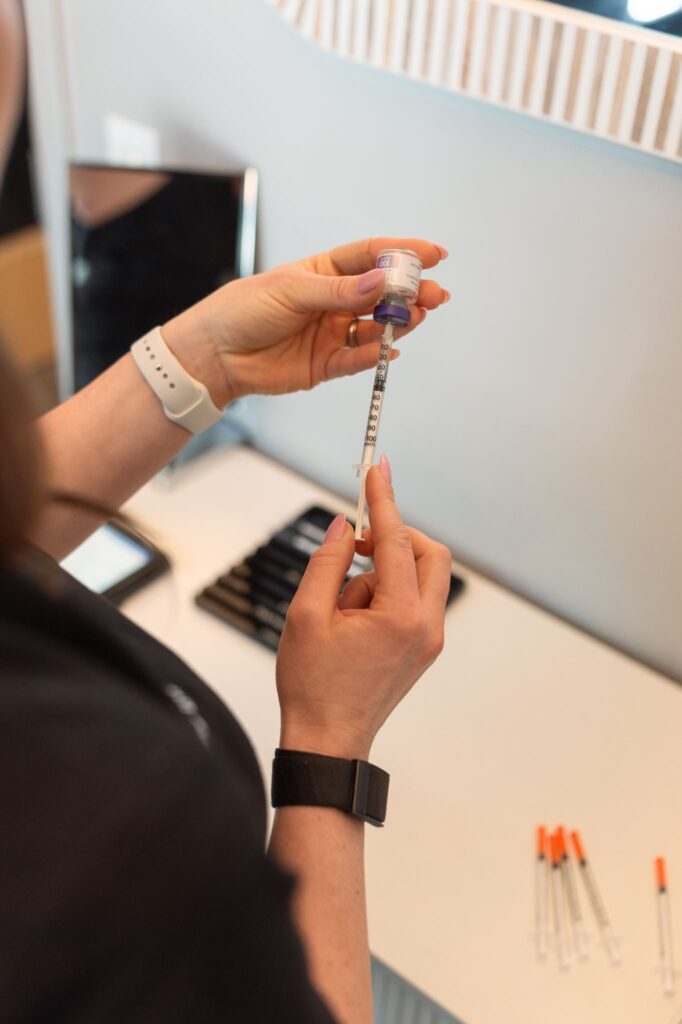
Most bruising is cosmetic and temporary, but there are a few signs worth a call. Significant swelling that continues to grow after the first 24 hours, a bruise that feels hard or increasingly painful rather than tender, or any bruising accompanied by vision changes near the eyes should be checked promptly. These situations are uncommon, and our providers would rather hear from you and confirm everything is healing normally than have you wonder.
If you’re preparing for an appointment and want a clearer sense of what to expect for your specific treatment area, our team can walk you through it during your consultation.
Not typically. Bruising risk depends more on the specific injection site and individual vessel anatomy than on which product is used. Areas with denser vessel networks, like the lips or under the eyes, tend to bruise more regardless of treatment type.
Yes. The under-eye area has thin skin and a higher concentration of small vessels, which makes bruising both more common and more visible there than in other treatment areas. It typically resolves within ten to fourteen days.
Avoid alcohol, ibuprofen, aspirin, and fish oil supplements for at least 24 to 48 hours before treatment, unless a physician has prescribed them for a medical condition. Never stop a prescribed blood thinner without talking to the prescribing doctor first.
The evidence is mixed. Some smaller studies show a modest benefit for post-procedure bruising, while a recent review found the effect is weaker than social media claims suggest. It’s low-risk to try, but it shouldn’t replace the basics like avoiding blood thinners before your appointment.
Yes, keeping a healing bruise covered or protected with sunscreen is a good habit. Sun exposure on healing or thinning skin is a recognized factor in making bruising more visible and slower to resolve, not faster.
That’s outside the typical healing window and worth a quick call to our office. It’s usually still nothing serious, but we would rather confirm that than have you wait it out unsure.
Bruising is one of the most common, most temporary parts of getting Botox or filler, and a little preparation goes a long way toward minimizing it. If you have questions about what to expect for your specific treatment, book a consultation or give us a call at 303-888-0103.
Botox and dermal fillers are FDA-approved treatments performed by licensed medical professionals. Individual healing times vary. This content is for informational purposes only and does not replace medical advice.