
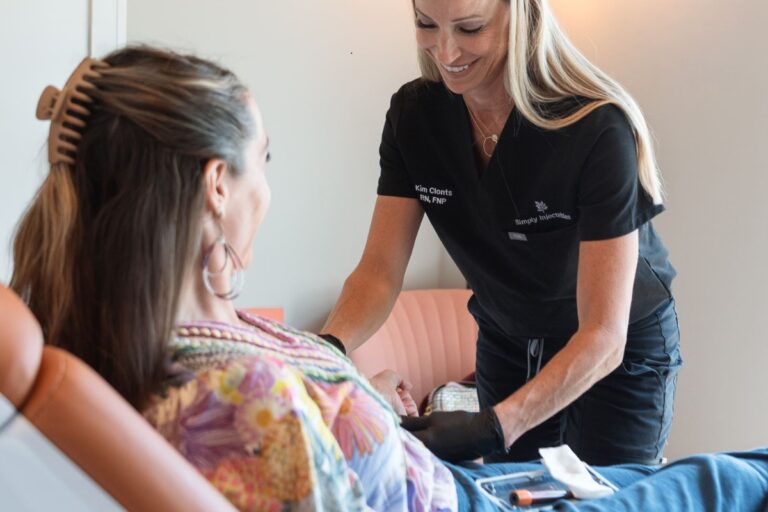
If you’ve looked into PRF or PRP for facial rejuvenation, you’ve probably noticed the two terms often get used almost interchangeably online, even though they’re not the same thing. Both use your own blood to stimulate collagen and support tissue repair, but the way each one is prepared, and what that means for your results, is different. Here’s what separates PRF from PRP, and why it matters when you’re deciding on a treatment that’s best for you.
What Is PRF, and How Is It Different from PRP?
Both PRF and PRP start the same way, with a small blood draw that gets spun in a centrifuge to separate out the platelet-rich portion. From there, the two diverge. PRP is processed with an anticoagulant, which keeps it in a liquid state and concentrates platelets alone. PRF skips the anticoagulant, making it 100% natural, and spins at a slower speed, which allows fibrin, a structural protein, to form a matrix that holds the platelets, white blood cells, and growth factors together in a gel-like consistency rather than a liquid.
The fibrin matrix is what makes PRF vastly different from PRP. Research comparing the two describes PRF as a second-generation platelet concentrate developed specifically to address PRP’s limitations, with studies finding PRF produces a higher cumulative release of growth factors than PRP, released slowly over time rather than all at once.
What Does the Slower Release Mean for Results?
The slow, sustained release is where PRF has an edge for facial rejuvenation specifically. Because the fibrin matrix breaks down gradually, the growth factors trapped inside it get released over days rather than immediately, which gives tissue more time to respond and rebuild. PRP delivers a faster, more concentrated burst that can be useful in certain applications, but for skin quality and gradual tissue support, the slower release tends to align better with how skin naturally regenerates.
Is PRF or PRP Better for Under-Eye Treatment?
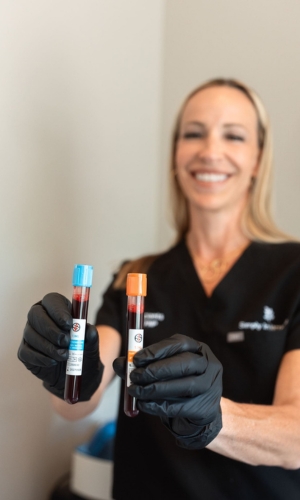
This is one of the most common versions of this question, and it’s a fair one given how delicate the under-eye area is. A 2025 systematic review comparing PRP and PRF for periorbital rejuvenation found that PRF was associated with better improvements in skin texture, fine lines, and crepiness, while PRP showed stronger results for treating pigmentation issues like dark circles caused by discoloration rather than volume loss. The right choice depends on what’s causing the under-eye concern, not just personal preference.
Which Treatment Does Simply Injectables Use?
At Simply Injectables, we offer PRF rather than PRP, both as a standalone facial treatment and as part of our PRF Gel options. We chose PRF specifically for its sustained growth factor release and its gel-like consistency, which allows for more controlled placement in areas like under the eyes and along fine lines. PRF is also used beyond facial rejuvenation in our PRF for sexual wellness treatments, where the same regenerative properties apply to different tissues.
Frequently Asked Questions
PRF stands for platelet-rich fibrin. It’s made from a small sample of your own blood, spun to concentrate platelets and growth factors into a gel-like matrix that’s then reintroduced into the treatment area.
Research suggests PRF tends to perform better for skin texture and fine lines under the eyes, while PRP has shown more benefit for pigmentation-related dark circles. The better option depends on what’s causing your specific concern.
No. Both start with a standard blood draw and involve similar injection techniques. Most patients describe the discomfort as mild and comparable between the two.
This varies by treatment goal and area, and it’s something your provider will map out during your consultation based on your skin and what you’re hoping to achieve.
Some providers do combine them, though at Simply Injectables we currently offer PRF as our platelet-based regenerative treatment. Your provider can walk you through what that looks like for your specific goals.
Yes. Because PRF is made entirely from your own blood with no additives, the risk of allergic reaction or rejection is very low compared to synthetic treatments.
PRF and PRP aren’t interchangeable, and knowing the difference helps you ask better questions during your consultation. If you’re curious whether PRF is a fit for your goals, book a consultation or give us a call at 303-888-0103.
PRF treatments use the patient’s own blood and are performed by licensed medical professionals. Individual results vary. This content is for informational purposes only and does not replace medical advice.